Nazarenos: The Truth Behind the Hooded Tradition That Predates Misunderstanding
Written by adminVibe on April 4, 2026
(ReggaeVibeMedia.com) – For all those who think Kanye West is crazy for wearing this Nazarenos outfit, pay attention closely. What you’re looking at is not madness—it’s history. Deep, layered, spiritual history that many people simply were never taught. And once you understand who the Nazarenos really are, you begin to see that sometimes… what looks strange is actually knowledge being reintroduced to a world that forgot.
Who Are the Nazarenos?
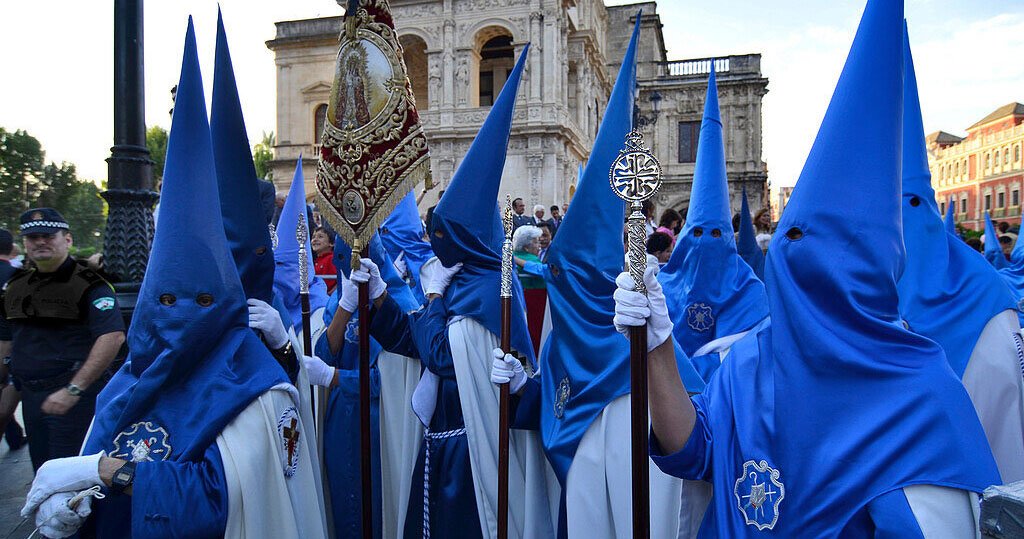
The Nazarenos (also called penitents) are members of religious brotherhoods—known as cofradías—who take part in Holy Week (Semana Santa) processions, primarily in Spain and parts of Latin America.
These are not costumes. These are acts of devotion.
Nazarenos walk through the streets in silence or to solemn music, carrying candles, crosses, or sacred symbols, representing:
- Penance
- Humility
- Spiritual reflection
- Connection to God
Some take things even further—walking barefoot for miles, dragging chains, or carrying heavy wooden crosses to physically feel the weight of sacrifice.
This tradition traces back to the Middle Ages, when public acts of repentance were a way to seek forgiveness and spiritual cleansing.
Why Do They Dress Like That?
The signature look—the robe and pointed hood (capirote)—has deep meaning.
- The hood covers the face → humility and anonymity before God
- The cone shape points upward → the soul reaching toward heaven
- The full robe → separation from ego and worldly identity
These garments remove individuality so the focus stays on spiritual purpose, not personal image.
The Meaning Behind the Colors
Not every Nazareno looks the same. The colors carry spiritual messages tied to each brotherhood.
- White → purity, resurrection, victory over sin
- Black → mourning, grief, deep repentance
- Purple → penance and preparation
- Red → sacrifice and martyrdom
- Blue → devotion (often linked to the Virgin Mary)
- Green → hope and renewal
This is not fashion—this is symbolism in motion.
The Act of Self-Whipping and Physical Penance
One of the most misunderstood aspects of these processions is the act of self-flagellation—where some penitents whip their own backs.
This is not about harm for the sake of harm.
It represents:
- A physical expression of repentance
- Sharing in the suffering of Christ
- Spiritual discipline and sacrifice
- A cleansing of sin through endurance
These individuals, sometimes called disciplinantes, may strike themselves rhythmically while walking in procession. Historically, others have worn rough materials, chains, or even embedded thorns to create discomfort.
It’s important to understand—this is voluntary and deeply personal. Not all Nazarenos participate in this level of penance, but those who do see it as the ultimate form of humility and devotion.
In a world obsessed with comfort, this tradition reminds us of something ancient: growth and redemption often come through struggle.

The KKK Comparison: Let’s Set the Record Straight
A lot of people see Nazarenos and immediately think of the Ku Klux Klan.
That’s backwards.
Here’s the truth:
- Nazarenos date back to medieval Spain—centuries before America existed
- The KKK didn’t appear until the late 1800s
- The visual similarity exists—but the KKK adopted a look that was already established
The original meaning:
- Nazarenos → humility, repentance, devotion
- KKK → hate, fear, racial violence
Same silhouette. Completely different purpose.
Understanding that difference is critical.
So What Is Kanye Really Doing?
When someone like Kanye steps out in something that sparks confusion, debate, even outrage—it forces people to ask questions.
And questions lead to research.
And research leads to truth.
There’s often a method to what looks like madness.
Because now people are digging deeper instead of just reacting.
The Bigger Message: Know Your History
The deeper lesson here goes beyond Nazarenos.
It’s about education.
Especially for Africans and the descendants of Africans—whose histories have often been:
- Rewritten
- Hidden
- Or erased
We cannot rely on systems that were never built to fully teach us about ourselves.
That responsibility is ours.
Because at the end of the day:
Who can tell our story better than us?
Final Word
Don’t just react—research.
Don’t just judge—understand.
Because sometimes what looks strange… is actually truth wrapped in tradition.