Coronation Day: 96 Years Since Ras Tafari Became Haile Selassie I — And The Day That Named A Movement
Ninety-six years ago, on November 2, 1930, Ras Tafari Makonnen was crowned Haile Selassie I, Emperor of Ethiopia, at St. George's Cathedral in Addis Ababa. This feature traces the coronation itself — its splendour, its world dignitaries and its titles — through Marcus Garvey's prophecy and the Revelation passages that led Jamaicans to recognise a messiah, to Leonard Howell's early preaching, the movement's spread through reggae, and what Coronation Day still means: the day that named Rastafari and made Ethiopia the enduring symbol of Black sovereignty.
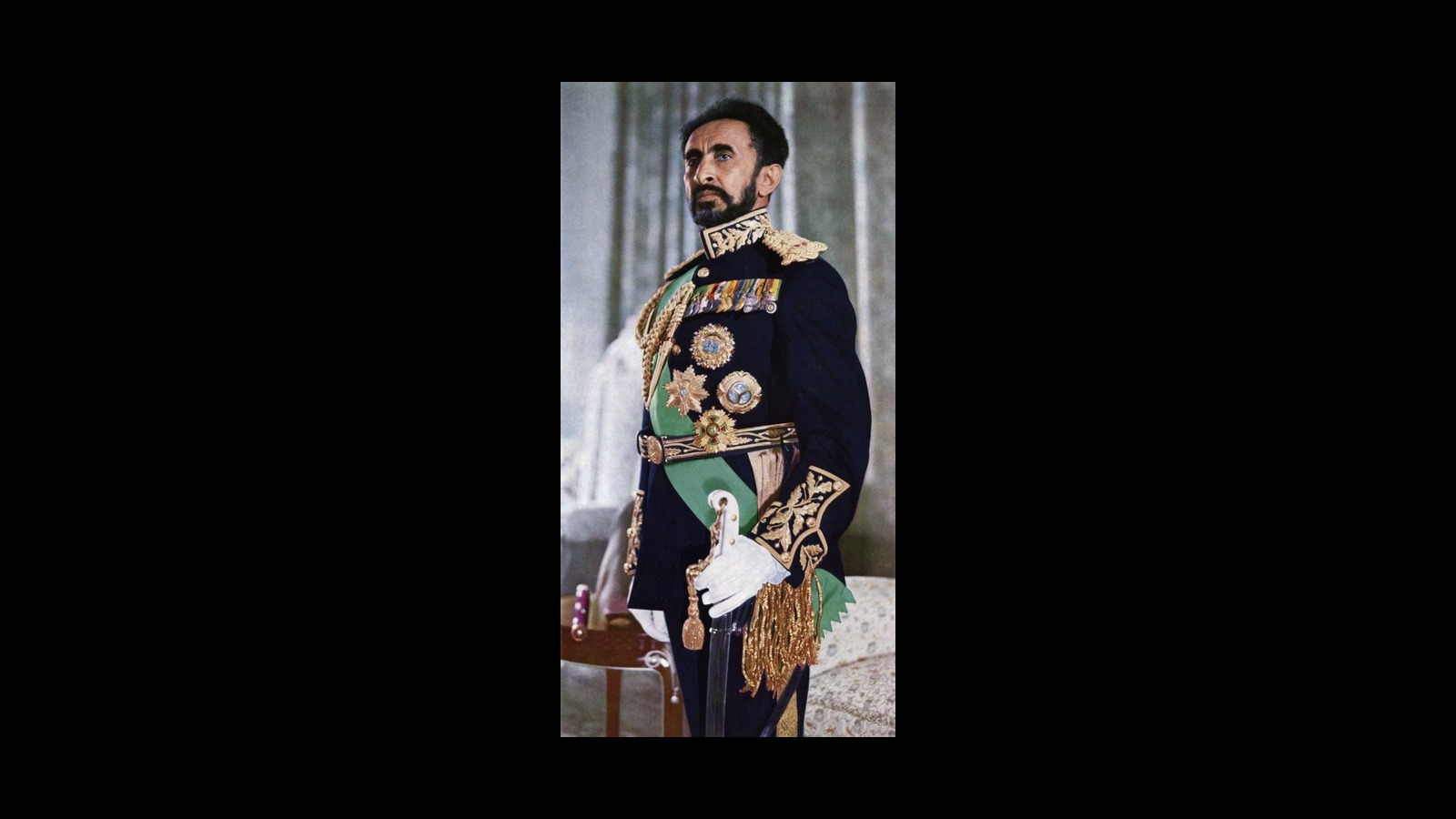
(ReggaeVibeMedia.com) — On November 2, 1930, in the Cathedral of St. George in Addis Ababa, Ras Tafari Makonnen was crowned Negusa Nagast — King of Kings — of Ethiopia, and took the regnal name Haile Selassie I. Ninety-six years later, that single morning is still observed as Coronation Day by Rastafari all over the world, because it did something no other event of the century did: it gave a scattered, colonised people a living symbol of Black sovereignty, and it gave a faith its name.
The coronation itself was, by all accounts, a most splendid affair. Royals and dignitaries travelled from all over the world to witness it: the Duke of Gloucester, son of King George V of England; Marshal Louis Franchet d'Espèrey of France; the Prince of Udine for Italy's King Victor Emmanuel III; and Herman Murray Jacoby, sent as the personal representative of United States President Herbert Hoover. Emissaries came from Egypt, Turkey, Sweden, Belgium and Japan. The British author Evelyn Waugh was there too. One American newspaper report put the cost of the celebrations at more than $3,000,000 — an enormous sum in 1930.
Tafari took as his full title: "By the Conquering Lion of the Tribe of Judah, His Imperial Majesty Haile Selassie I, King of Kings of Ethiopia, Lord of Lords, Elect of God." Haile Selassie means, in Ge'ez, "Power of the Trinity" — it was the name given at his infant baptism, and he adopted it again as his regnal name. His wife, Empress Menen Asfaw, was crowned beside him. Ethiopian tradition traces the Solomonic line back to Menelik I, described in the Kebra Nagast as the son of King Solomon and the Queen of Sheba — a lineage the coronation publicly renewed before the eyes of the world.
Why did the news land so hard in Jamaica? Because the ground was already prepared. Marcus Garvey, the Jamaican Pan-Africanist, had taught his followers to "look to Africa" for a coming king — a prophecy his people held onto through the 1920s. When reports of the coronation reached Kingston, carried in part by two consecutive Time magazine articles before and after the event, poor Jamaicans opened their Bibles and read Revelation 5:5 and 19:16 — the Lion of the Tribe of Judah, the King of Kings and Lord of Lords — and saw the titles of the newly crowned emperor staring back at them. The name of the movement says the rest: Ras, the Ethiopian title Tafari held before his crowning, joined to Tafari Makonnen himself. Rastafari is, literally, the faith of Ras Tafari.
The early preachers moved fast. Leonard Howell, in his tract The Promise Key, written in the early 1930s, claimed to have witnessed the coronation of the Emperor and Empress in Addis Ababa, and proclaimed Ras Tafari the true Head of Creation. Howell built the Pinnacle community in St. Catherine, and the movement spread through Nyabinghi worship, Ital living, dreadlocks and a reading of the Bible through an African lens — with Ethiopia as Zion and the West, with its colonial rule and its legacy of slavery, as Babylon, exile from the homeland. It was not an easy road: the early Rastafari faced police raids, jail and public scorn in colonial Jamaica. They held the faith anyway, and reggae carried it to the world — most famously through Bob Marley, who was baptised Berhane Selassie, "Light of the Trinity," by the Ethiopian Orthodox Church.
An honest feature has to hold two truths at once. Selassie himself was an Ethiopian Orthodox Christian, and he explicitly denied the divine status that Jamaican believers proclaimed for him. He was also, by any measure, a statesman of world standing: he led Ethiopia into the League of Nations and the United Nations, addressed the League in 1936 against Italy's invasion — choosing to speak in Amharic though he was fluent in French — presided over the formation of the Organisation of African Unity in Addis Ababa in 1963 and served as its first chairman, and was named Time's Person of the Year for 1935. In 1955 he offered 500 acres of his personal land at Shashamane to Black people wishing to return to Africa. And on April 21, 1966, when he visited Jamaica as a state guest, tens of thousands of Rastafari greeted him at Kingston airport in what is now remembered as Grounation Day — the movement's second most important holiday.
What makes the coronation story endure is what Ethiopia itself represented. Ethiopia was the African country that escaped colonialism — the victory at Adwa in 1896, when Ethiopian forces defeated Italy, made it a symbol of Black independence decades before the coronation. When the rest of Africa was partitioned by European powers, Ethiopia kept its throne, its church and its flag. For a people whose ancestors had been stolen across the Atlantic, a Black king crowned in Africa, recognised by the kings and queens of Europe, was not abstract theology. It was proof that sovereignty was possible.
So today, November 2, the 96th Coronation Day is not a history lesson for its own sake. It is the root of the culture this platform stands on: the reason the music carries the names Zion and Jah, the reason the colours green, gold and red fly over sound systems from Kingston to London to Addis Ababa, and the reason a faith born in the slums of Kingston now counts followers on every continent. The crown was placed on one man's head in 1930. The movement it named belongs to all of us now.